Japanese Acupuncture in Surrey
Acupuncture travelled from China to Japan more than 1,400 years ago. Over the centuries, and especially during Japan's long period of isolation from the outside world, it grew into a tradition of its own: quieter, gentler and guided above all by touch.
In Japan, acupuncture and moxibustion are known together as
shinkyu (鍼灸). Josh's practice is mostly rooted in various Japanese traditions. It is based on the idea of doing more with less, focusing on the pulse, while the nervous system relaxes through the gentle approach.
Back Pain
Back pain affects nearly eight out of ten people at some point in their lives and can make everyday tasks feel impossible. Acupuncture eases tension, reduces inflammation, and restores balance so you can move more freely and comfortably.
Different Styles, One Source
Just like the Five Element approach, every Japanese style of acupuncture returns to the same classical sources: the Huang Di Neijing (the Su Wen and Ling Shu) and, especially in Japanese Acupuncture, the Nan Jing (難經), the "Classic of Difficulties". What makes the Japanese tradition different is not the theory. It is how that theory is felt, tested and applied through the hands.
A few moments in history shaped it:
- 562 CE: a Buddhist monk named Chiso brought 164 books on acupuncture and herbal medicine from China to Japan.
- 1635 to 1853: Japan closed its borders for over 200 years. Cut off from China, Japanese acupuncture and moxibustion evolved in their own direction.
- In the 17th century, Sugiyama Waichi, a blind acupuncturist, invented the guide tube (kanshin-hō 管鍼法). This small tube lets acupuncturists place extremely fine needles almost painlessly, and practitioners worldwide still use it. He also founded schools for blind practitioners.
- The 1930s: a group of practitioners led by Yanagiya Sorei called for a return to the classics. They formed Meridian Therapy (Keiraku Chiryō 経絡治療), which still underpins many Japanese styles today.
For around 400 years, acupuncture in Japan was a profession largely practised by blind people. This is one reason the Japanese approach is so centred on palpation. Diagnosis is something you feel, not just ask about.
The Japanese Approaches Josh Uses
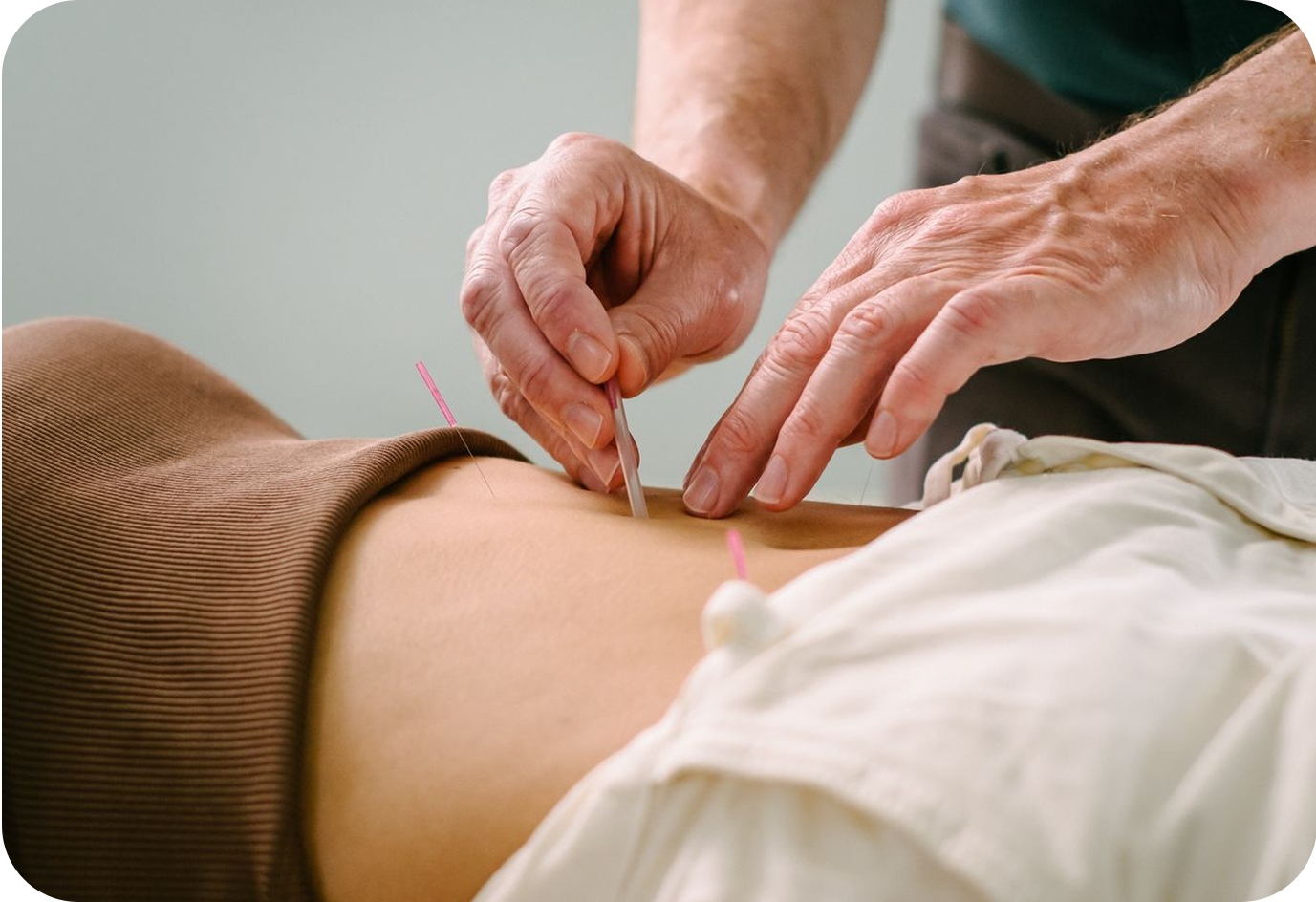
There is no single style of "Japanese acupuncture". Japan has dozens of schools, each with its own emphasis. Josh draws on several of them, choosing whichever lens best fits the person in front of him on the day.
Meridian Therapy and the Five Phases (経絡治療)
Meridian Therapy is where the Five Elements (Wu Xing 五行, or Gogyō in Japanese) meet Japanese palpation. If you have read our Five Element Acupuncture page, the foundations will feel familiar.
We use the pulse and abdomen to find which channels are deficient and which are in excess. Treatment then follows the principle from Chapter 69 of the Nan Jing: "To tonify, nourish the mother; to reduce, drain the child." For example, if the Lung (Metal) is weak, we may support its "mother", the Spleen (Earth), along the Generating cycle.
This first stage is called the root treatment (honchi-hō 本治法). It aims to restore the body's overall balance. A branch treatment (hyōchi-hō 標治法) then addresses the specific symptoms, such as a painful shoulder or a tight lower back. Almost every Japanese style is built around this idea of treating both root and branch.
Toyohari (東洋はり)
Toyohari is one of the most refined forms of Meridian Therapy. Kodo Fukushima, a blind acupuncturist, founded it in 1959 and set up the Toyohari Medical Association to train hundreds of blind practitioners. It has since spread to Europe, North America and Australasia.
Toyohari focuses on the practitioner's ability to feel and work with qi. Its key features include:
- Detailed pulse diagnosis, checked again after almost every point, to ensure pinpoint accuracy.
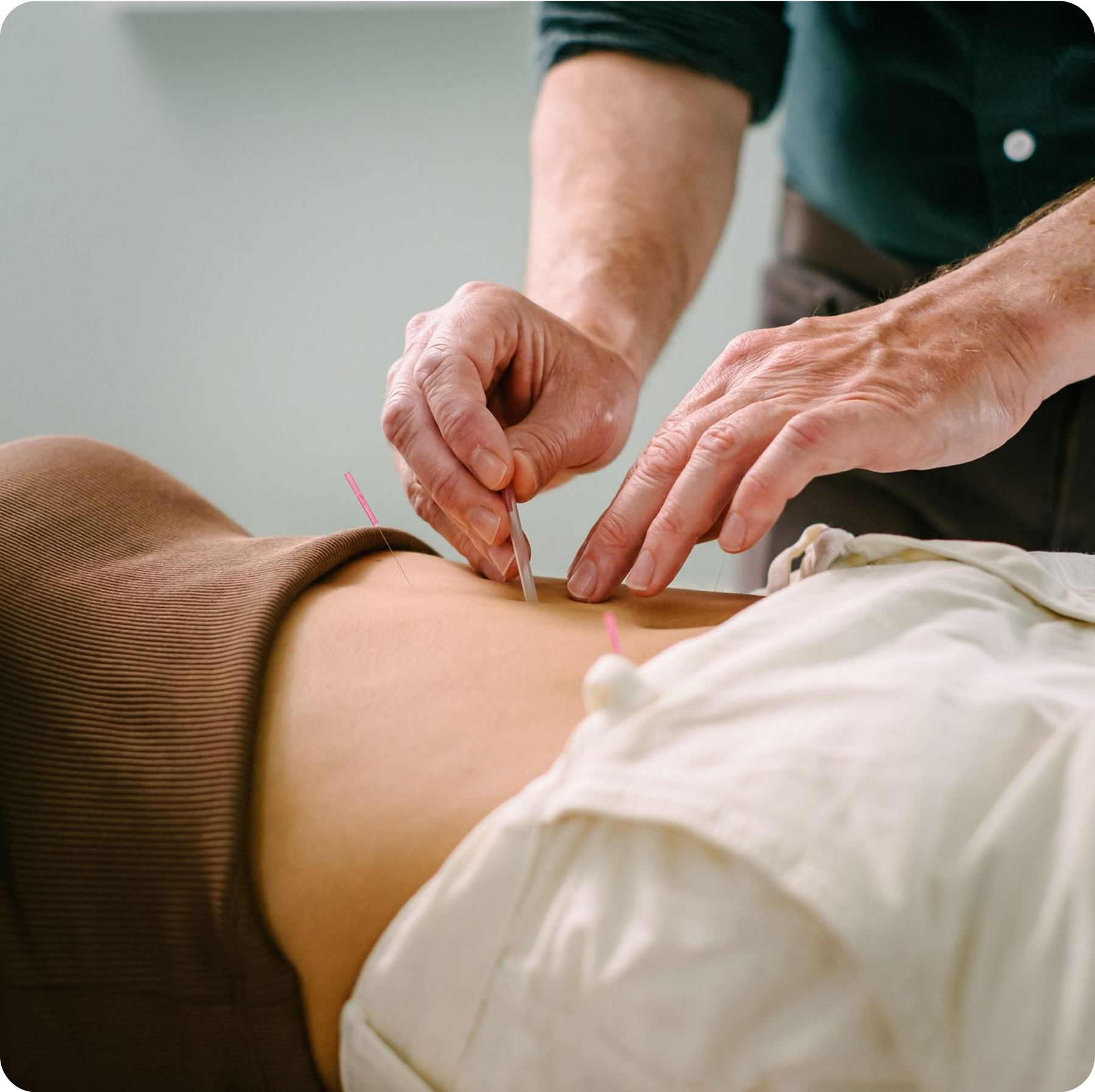
- Extremely gentle needling, often with fine silver or gold needles that barely touch or only just enter the skin
- Non-insertive tools such as the teishin, a rounded metal probe that stimulates a point without piercing the skin
- Group practice: Toyohari practitioners traditionally study together in small groups, refining their touch by feeling each other's pulses and checking each other's technique
Because it is so gentle, Toyohari is ideal for children, people who are wary of needles, and anyone who is exhausted, highly sensitive or recovering from illness. However, its results are truly remarkable for such a simple, yet effective, treatment.
Manaka Style: Yin-Yang Balancing (間中式)
Dr Yoshio Manaka (1911–1989) was a medical doctor, scholar, poet and artist. He devoted his life to bridging modern physiology and classical Chinese medicine. The result is one of the most structured and logical systems in acupuncture.
A Manaka treatment usually follows four steps:
- Diagnosis: mainly through abdominal palpation, looking for tender, tight "reflex areas" that point to which channels need attention.
- Root treatment: balancing the Eight Extraordinary Vessels, often using ion pumping cords. These are small copper and zinc cords with a diode, attached between two needles, which help move the body's energy in one direction without any manual stimulation. Manaka modelled these vessels using an octahedral (eight-sided) map of the body.
- Structural treatment: releasing tension along the back and spine, often using Japanese moxibustion, fine needles and/or sotai.
- Symptom treatment: addressing the main complaint directly.
What people tend to notice most is how quickly the abdomen changes. Areas that were tender at the start of treatment often feel noticeably softer after only a few minutes.


Josh inspires confidence and trust from the first meeting. He's a genuinely lovely man who wants to help people and who gets to know you and treats you holistically, in a relaxed, informal and warm environment. He uses a variety of techniques which he’s happy to explain and they are certainly helping in reducing my persistent radiotherapy fibrosis related upper back pain. This has been my first experience of acupuncture; it’s been surprisingly comforting and the combination of excellent practitioner and the right treatment means I leave every appointment with an enhanced feeling of well being.

— Lesley
What Makes Japanese Acupuncture Different?
Japanese acupuncture is often summed up in one phrase: maximum benefit with minimum intervention.
This makes Japanese acupuncture especially well suited to people who are nervous of needles, sensitive or depleted people, children, and anyone who wants a deeply relaxing treatment.
Finer needles
Japanese needles are usually much finer than those used in many other styles. I generally use a 0.16mm needle, which is ce, most patients feel very little.
Shallow insertion
Needles often go in only a few millimetres, and some techniques don't break the skin at all.
No strong needle sensation required
Many styles aim for a strong ache or "de qi" feeling at the point. Japanese styles generally do not, as the onus is on the practitioner to feel the qi; hence, most patients feel very little.
Palpation guides everything
The pulse, the abdomen (hara), and the channels are felt before, during, and after treatment, which stems from the history of practitioners primarily being blind.
Instant feedback
After each needle or technique, practitioners check the pulse and abdomen again to confirm the body has responded. Tight, tender areas often soften within moments, and patients can usually feel this for themselves.
Moxibustion is equal to needling
In Japan, moxa is an art in its own right, not an afterthought.
Moxibustion: The Art of Okyū (お灸)
Moxibustion is the gentle warming of points and channels with a burnt herb made from the dried, finely processed leaves of mugwort (Artemisia). In Japan, moxa quality is often a lot higher, as it is refined into a golden, cotton-like wool that burns quickly and evenly. It can be used in incredibly precise amounts, sometimes smaller than a grain of rice.
Okyū (お灸) is simply the everyday Japanese word for moxibustion, and it covers a whole family of techniques. Moxa is traditionally used to warm, nourish, move stagnation, and support people whose energy is low or who feel the cold.
Rice Grain Moxa (Tōnetsukyū 透熱灸)
The name means "heat that penetrates". Tiny threads or cones of the finest moxa, from the size of a sesame seed to a grain of rice, are rolled between the fingers, placed directly on a point and lit. Each one lasts only a moment and is removed or put out as soon as you feel a brief, sharp pulse of warmth. Several may be used on the same point.
Rice grain moxa acts at a deep level and is one of the most powerful tools for building energy in a weak or depleted system. A protective cream called shiunkō (紫雲膏) is often used underneath to protect the skin.
Heat-Perception Moxa (Chinetsukyū 知熱灸)
The name means "knowing the heat". A slightly larger, softer cone of moxa is placed on the skin and lit. As soon as you say you can feel the warmth, the cone is removed. It feels comforting rather than hot, and it works at a more surface level. It is used widely in Toyohari and Meridian Therapy, and it's a lovely introduction to moxa for anyone new to it.
Needle-Head Moxa (Kyūtōshin 灸頭鍼)
A small ball of moxa is fixed to the handle of an inserted needle and lit. The heat travels gently down the needle and spreads through the surrounding area. It's especially useful for deep, cold, achy joints and muscles, such as the lower back or knees.
Fukaya Style and the Bamboo Tube (Take-zutsu 竹筒)
Isaburo Fukaya was one of Japan's great moxibustion masters. Unusually, he was not licensed to use needles, so he treated with moxa alone. He developed his own "special points" and a clever tool: a small bamboo tube placed over a tiny burning cone. By controlling the airflow and pressing around the point, the practitioner can make direct moxa feel comfortable rather than hot, while still letting the heat reach deep into the body.
Postural Balance with Moxibustion (Kinseikyū)
Kinseikyū is a modern approach developed by the moxibustion practitioner Felip Caudet. It is based on the idea that structural imbalances, such as a twisted pelvis or uneven shoulders, restrict qi flow. Rather than forcing anything back into place, the practitioner applies precise moxa to specific points to release tension along the body's chains of muscle and connective tissue. This lets the body realign itself naturally. It is rarely taught in the UK, and it bridges energetic and structural medicine.
Ontake: Warm Bamboo (温竹)
Ontake (pronounced "on-ta-kay") is one of the most enjoyable treatments patients experience. A short piece of bamboo is filled with moxa and lit. As it heats, the bamboo is rolled, tapped and pressed along the channels, combining warmth, pressure and rhythm.
The tapping is often timed to a metronome at particular rhythms associated with different channels. Many people find it deeply hypnotic. Ontake works on the fascia and the nervous system, and it often brings on profound relaxation. It needs no needles at all, which makes it a wonderful option for needle-phobic people.
Moxa at Home
For some patients, Josh may suggest simple self-care between sessions, using small stick-on moxa cones or a moxa stick on one or two points. This is a long tradition in Japanese households and a great way to take an active part in your own health. You'll always be shown exactly how and where to use it safely.
Other Japanese Techniques
The Manaka Wooden Hammer and Needle
Dr Manaka revived a much older Japanese method of tapping needles, known as uchibari (打鍼), which dates back to the 16th century. Using a small wooden hammer and a blunt wooden "needle", points are gently tapped in a steady rhythm, usually over tender areas found on the abdomen or back. The rhythm can match the channel being treated.
Nothing goes through the skin. Most people find the gentle, rhythmic tapping soothing, and it can quickly release tension and tenderness. You can also use the hammer over small press pellets or magnets placed on points.
Sotai (操体法)
Dr Keizo Hashimoto (1897–1993), a Japanese medical doctor from Sendai, developed Sotai. Think of it as being similar to Japanese Osteopathy. Interestingly, its name reverses the Japanese word for exercise, taisō (体操). Hashimoto created it as an antidote to forceful, regimented exercise.
Its central principle is simple: move toward comfort (or sometimes described as ‘pleasure '). If turning your head to the left is painful, you gently turn it to the right, the comfortable direction, against a light resistance from the practitioner. You hold for roughly a breath, then suddenly let go and relax completely. This lets tight, guarded muscles release on their own, without force or pain.
Sotai helps with pelvic imbalances, spinal twists, stiff necks and shoulders, and back pain. It turns treatment into a partnership. You can also learn to do it yourself at home. Hashimoto saw health as the natural result of balance in four areas of life: breathing, eating and drinking, moving and thinking.
Non-Insertive Needling (Teishin 鍉鍼 and Contact Needling)
Some Japanese tools never enter the skin. The teishin is a smooth, rounded probe held lightly on a point. Contact needling brings the tip of a fine needle to the skin's surface without inserting it. These techniques are perfect for very sensitive patients, children, and anyone who would rather not be needled.
Shonishin (小児鍼): Japanese Acupuncture for Children
Shonishin means "little children's needle". It's a non-invasive method developed in Japan's Osaka region. Instead of needles, it uses special tools to stroke, tap and lightly press the skin. It's painless and quick, so children usually enjoy it. It's traditionally used for common childhood complaints such as poor sleep, digestive upsets, colic and irritability.
What a Japanese Acupuncture Treatment Feels Like
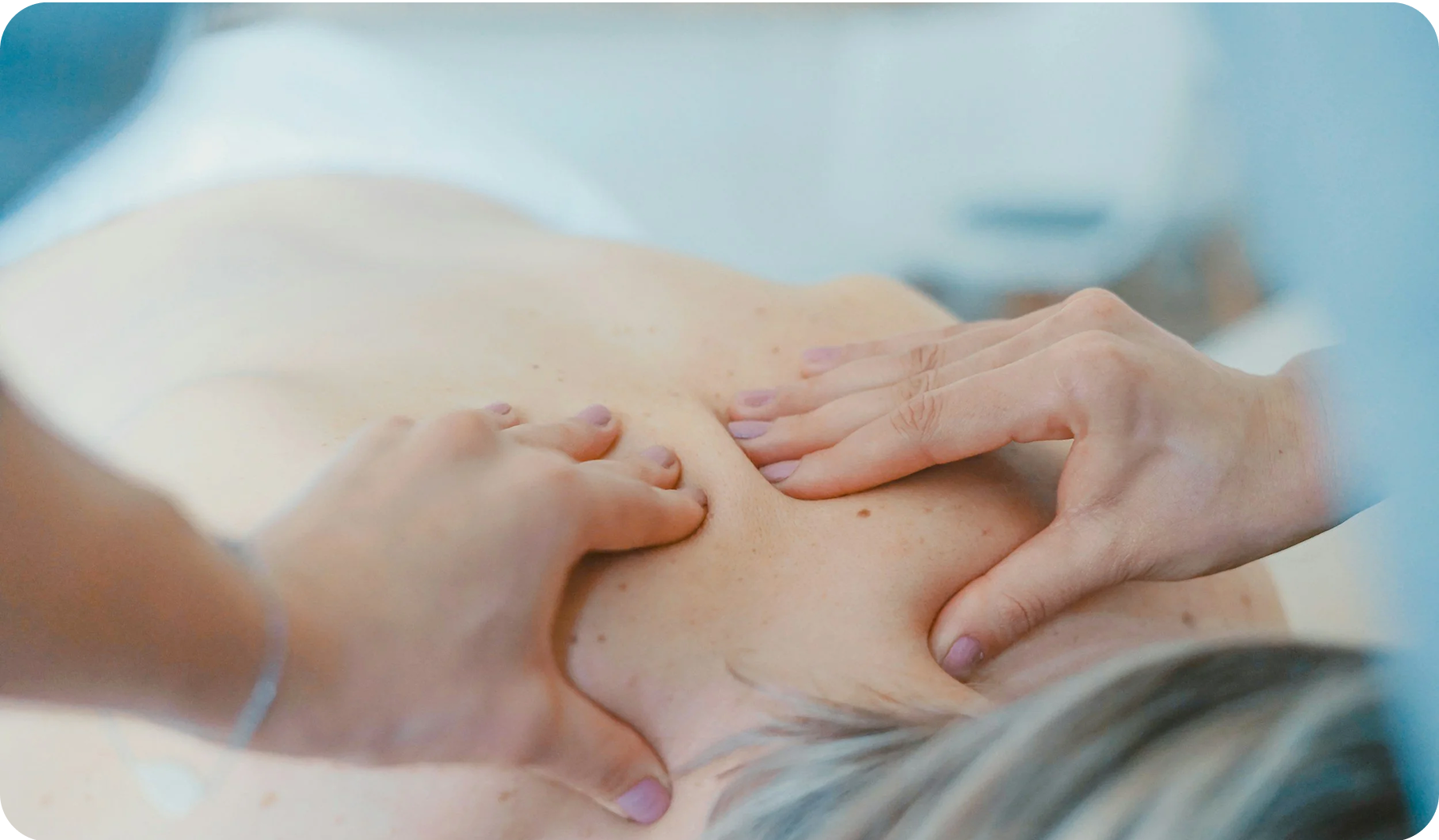
Most people are surprised by how gentle yet profound this approach is. A typical treatment might look something like this:
A detailed conversation about your health, followed by significant palpation techniques, including pulse and abdominal diagnosis.
A root treatment using a handful of very fine needles, sometimes with little or no insertion.
Re-checking the pulse and abdomen as we go, so each step is guided by how your body responds.
A branch treatment for your specific symptoms. This might include moxa, ontake, sotai, the Manaka hammer, cupping or massage.
Resting quietly while your nervous system settles
As always, you lead your treatment. If you would prefer no needles, no moxa, or a gentler approach, say so. The Japanese tradition offers plenty of tools to help us work with you comfortably. You can read more on our What to Expect at Your First Treatment page.
"Josh is honestly a wizard! He takes so much time to listen, hear and understand what’s happening in your life before working his magic during your treatment. He makes you feel safe and relaxed, which for myself was a key part in trusting the treatment as a newbie. The treatment itself for my personal case has been like a miracle. The relief & magic he has provided from my symptoms has given me so much hope in recovery. I truly believe he wants to help his clients as much as possible. session."
— Rebecca
FAQs For Japanese Acupuncture
I get a lot of questions about this style of acupuncture as it's often a surprise that not everyone practices the same way. Here's some of the comment questions I get asked.
Is Moxibustion Safe?
Yes. When a trained practitioner performs it, moxibustion is very safe. A few things are worth knowing:
- You will always be asked before any moxa is used, and you can say "hot" or "stop" at any time. The moxa is removed straight away.
- Direct moxa, such as rice grain moxa, is used in tiny amounts and removed as soon as you feel warmth. Very occasionally it can leave a small red mark, which fades. Protective cream can be used to reduce this if you have reservations.
- Moxa produces a pleasant, earthy smoke. Please let us know if you have asthma or are sensitive to smoke, and we can adapt the treatment.
Josh is a Registered Member of the British Acupuncture Council (BAcC) and a first-class honours graduate of the International College of Oriental Medicine, where he now teaches.
What is the difference between Japanese and Chinese acupuncture?
Both come from the same classical texts. Japanese acupuncture generally uses finer needles, shallower insertion and fewer points. It relies heavily on palpation of the pulse and abdomen, and it doesn't aim for a strong needle sensation. Moxibustion is also used much more widely and more precisely.
Is Japanese acupuncture painful?
Most people feel very little. The needles are extremely fine, often only enter the skin, and some techniques don't insert at all. Many patients fall asleep during treatment.
Can I have Japanese acupuncture if I'm scared of needles?
Yes. Many Japanese techniques, such as the teishin, contact needling, ontake, moxibustion, the Manaka hammer and sotai, don't involve inserting needles at all.
Where can I have Japanese acupuncture in Surrey?
Josh Barrow offers Japanese acupuncture and moxibustion at his clinics in Farnham and Godalming, welcoming patients from across Surrey and Hampshire.
Is This Something You Want To Explore Further?
Japanese acupuncture carries the same classical wisdom as every other style, refined over centuries into something quiet, precise and deeply felt. It is guided by touch, and it asks for only as much intervention as the body needs. It shows that a light touch can create profound change.
Each technique within the Japanese brushstroke serves the same aim: to help your body find its way back to balance. This holds whether it is the refined subtlety of Toyohari acupuncture, the strongly structured approach of Manaka, the warmth and fire of moxibustion, or the easy movements of sotai.
Josh offers Japanese acupuncture at his clinics in Farnham and Godalming, Surrey. He welcomes patients from Guildford, Fleet, Aldershot, Farnborough, Woking, Hook, Bramley and the surrounding areas.