What to Expect at Your First Acupuncture Treatment
If you have never had acupuncture before, it is completely natural to feel a little unsure about what happens when you walk through the door. Many of my patients tell me they were nervous before their first session, and almost all of them say the same thing afterwards: "I wish I'd come sooner."
Acupuncture for Trauma Healing
When we experience trauma, the body can hold on to it long after the event has passed. Acupuncture for trauma helps to release this tension, calm the mind and body, and guide you back to feeling grounded and safe.
Overview
Because I do this every time, I sometimes jump straight into conversation and forget to set expectations, so I hope this page helps you prepare in case we start chatting away.
My aim is for you to arrive knowing exactly what to expect. Below, I walk you through each stage of a first acupuncture treatment at my clinics in Farnham and Godalming, from the in-depth consultation through to how you might feel in the days that follow.
At a glance:
- Your first appointment lasts around 90 minutes.
- We begin with a detailed conversation about your health, history, and goals.
- I use traditional diagnostic methods, including pulse and abdominal diagnosis.
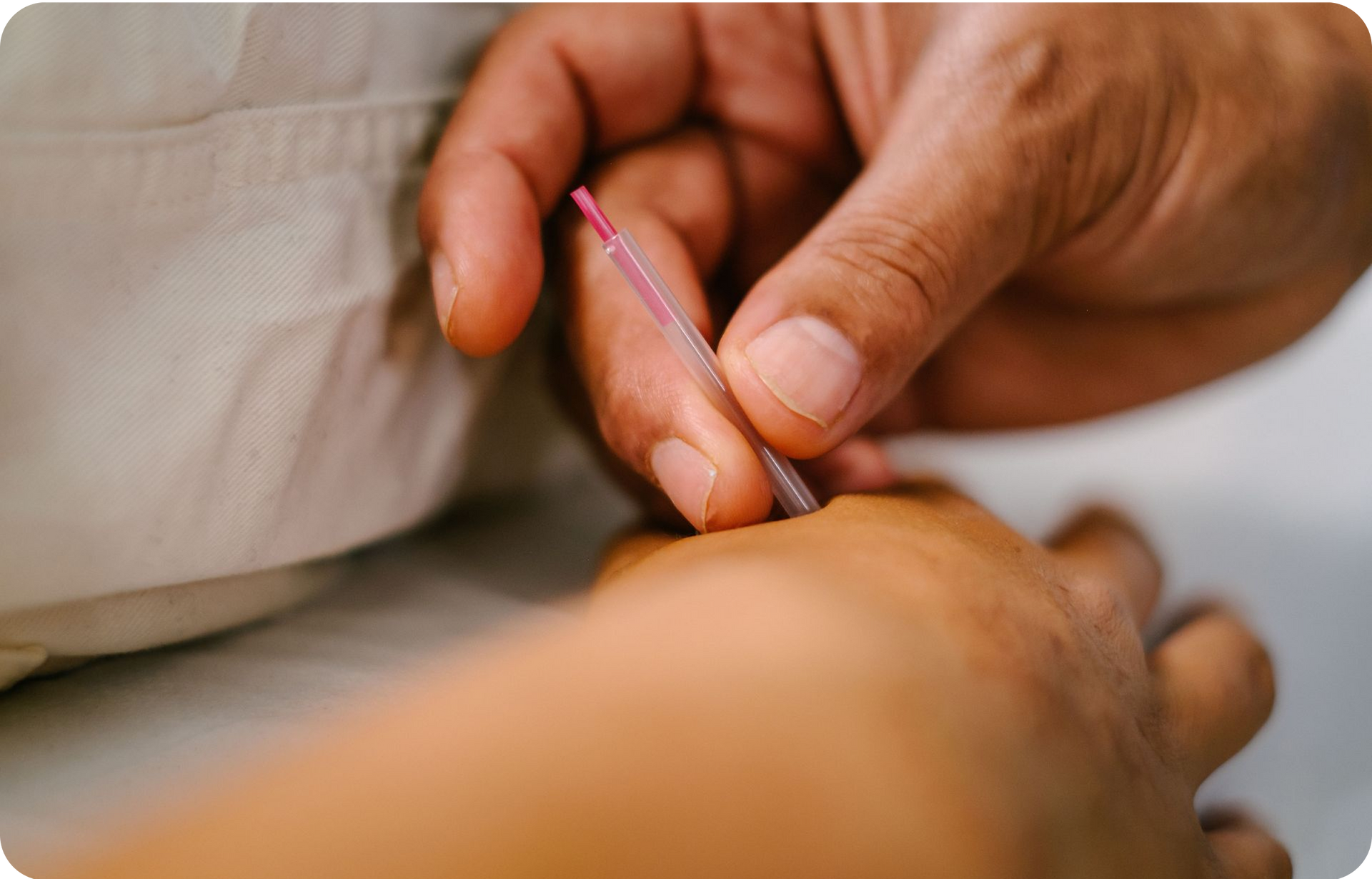
- Most treatments use between 4 and 8 very fine, single-use, sterile needles.
- I’m trained in different adjunctive modalities, so if they feel relevant to your needs, I may use a few techniques that don’t involve needles.
- Needles are usually left in for around 20 to 30 minutes while you rest.
- Most people leave feeling deeply relaxed, calmer and lighter.
- You are in control throughout, and you can pause or stop at any time.
You Lead The Treatment
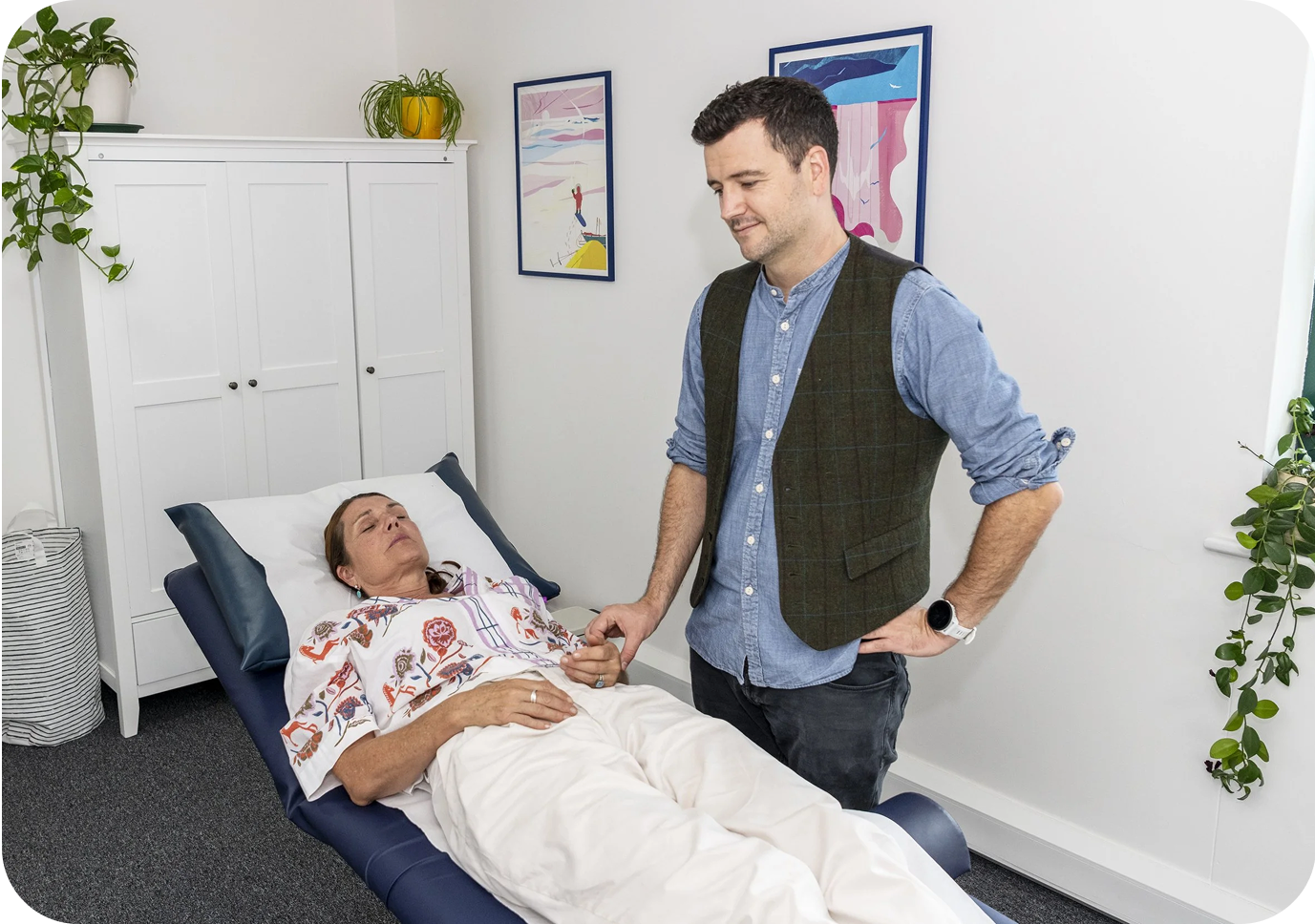
Before anything else, I want you to know this: you are always in control of your treatment.
- You don't have to answer every question. I ask a lot of questions because it helps me see the full picture, but if something feels too personal or you'd rather not talk about it on that day, say so. There is never any pressure; we can treat with as much or as little information as you feel confident providing.
- You can pause or stop at any time. Whether it's during the conversation, the diagnosis or the treatment itself, just let me know and we will stop—no explanation needed. I want you to feel safe and confident throughout the treatment, so if you don’t, just let me know.
- I will always explain what I am doing and why. Before I touch the pulse, the abdomen or place any needles, I will talk you through it and check that you're comfortable. It’s good practice and helps ensure we are working together.
- You can ask questions at any point. Many patients love learning about the philosophy of Chinese Medicine and the reasoning behind their treatment, so please ask as much as you like. I teach acupuncture alongside my clinical practice, so I will always want to explain things to you. Please also tell me to be quiet if you don’t want to know.
- Your comfort matters. If you would like a blanket, a different position, fewer needles, or a gentler approach, tell me. The treatment is adapted to you, not the other way round.
For me, a practitioner's presence and intention are as important as the treatment itself. Feeling safe, heard and at ease is a large part of what allows the body to heal.


“I can’t recommend acupuncture with Josh highly enough. From the very first treatment, I felt a noticeable shift, a deep sense of relaxation and calm that stayed with me long after the session ended. It was honestly amazing to feel such a positive change so quickly. Josh is incredibly knowledgeable and takes the time to understand exactly what you need. He creates such a safe, comfortable, and welcoming environment that you immediately feel at ease in his care. My experience has been so positive that both my husband and son have now started treatments as well, and they’ve each noticed real improvements too. It’s been wonderful to see the benefits extend to the whole family. I am so grateful to have found such a skilled and caring practitioner and would absolutely encourage anyone to give it a try.”

— Gauri
Step 1: An In-Depth Consultation
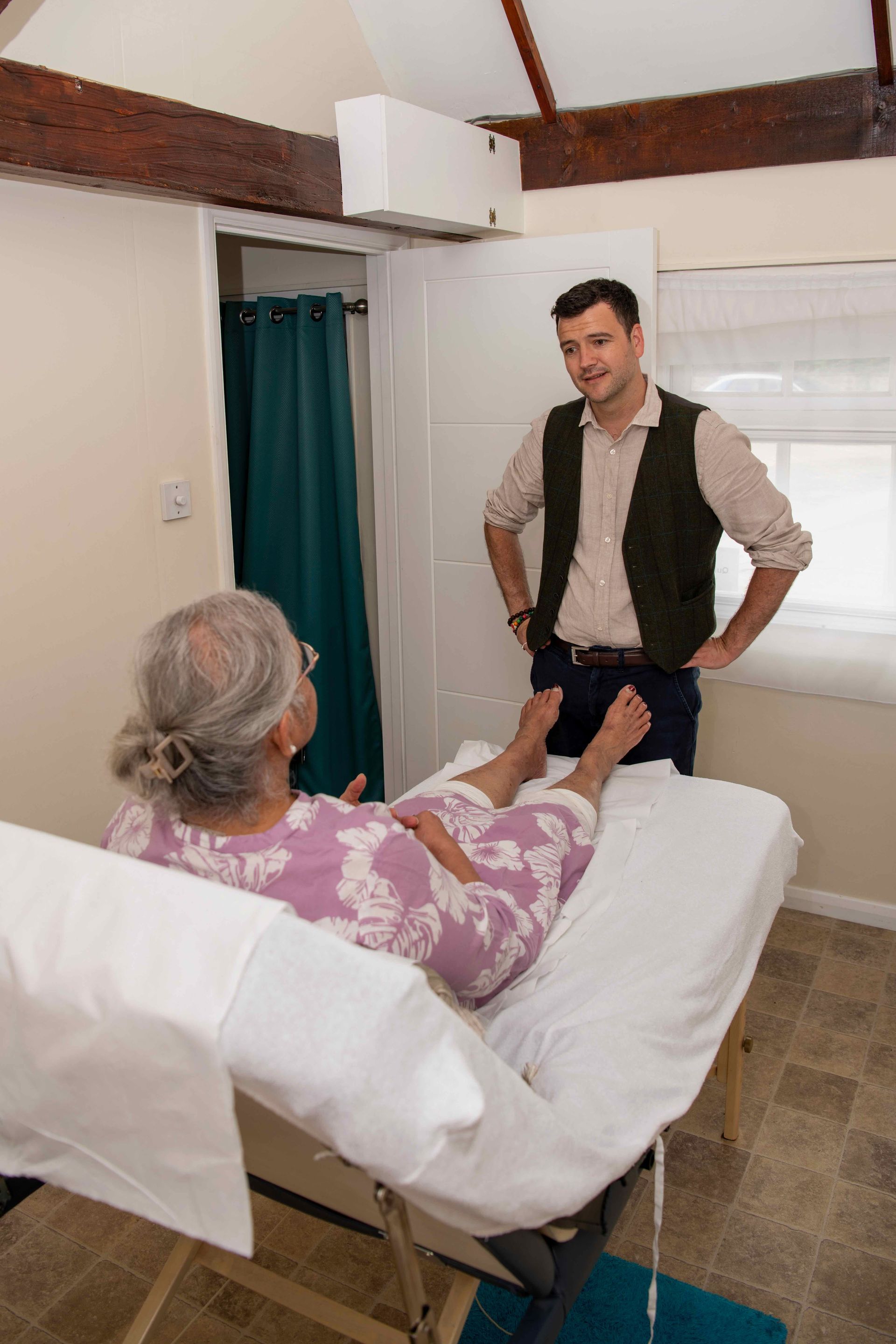
Your first appointment begins with a long, unhurried conversation. This is one of the most important parts of the whole process, and many patients describe it as feeling "like a therapy session and acupuncture combined."
In Chinese Medicine, symptoms are rarely isolated. Back pain might be connected to how you sleep, headaches to your digestion, or anxiety to your energy levels and cycle. So, alongside the main reason you've come, I'll ask about your health as a whole, including:
- Your main concern, when it started and what makes it better or worse
- Your medical history, medications, test results and any past treatments
- Sleep, energy levels and how you feel at different times of the day
- Digestion, appetite and thirst
- Your response to temperature (do you tend to run hot or cold?)
- Stress levels, mood and emotional wellbeing
- Menstrual health, fertility or menopause, where relevant
- Work, family life, exercise, hobbies and what you'd like to get back to
Some of these questions may seem unrelated to why you came in, but each answer gives me another piece of the puzzle. This attention to detail lets me trace your symptoms back to their root, rather than simply treating what's on the surface.
And, as above, if there's anything you would rather not discuss, that is absolutely fine.
Step 2: Traditional Diagnostic Techniques
Alongside our conversation, I use the traditional diagnostic methods that acupuncturists have relied on for thousands of years. In classical Chinese Medicine, these are often described as Looking, Listening, Smelling and Touching (Palpation).
Looking
I'll observe things such as your complexion, posture, how you move, the brightness of your eyes, and often your tongue. The tongue's colour, shape and coating can offer a helpful window into what is happening internally, particularly around digestion, circulation and heat or cold in the body.
Listening
This includes listening to the quality of your voice, your breathing and the way you speak. A voice can be strong or soft, the breath full or shallow, and each of these offers subtle clues about your overall vitality.
Smelling
It may sound unusual, but subtle changes in body odour have long been used as a diagnostic sign in Chinese Medicine. This is a gentle, passive observation, and it's simply one more piece of information that helps build the overall picture.
Palpation (Touch)
Palpation is central to the Japanese and Classical styles of acupuncture that I practise. It includes feeling the pulse, the abdomen and specific areas along the channels (meridians) to find areas of tension, tenderness, temperature change or weakness. Two of the most important forms of palpation I use are pulse diagnosis and abdominal diagnosis, which I explain in more detail below.
Two Important Diagnostic Techniques Explained
Pulse Diagnosis: What Your Pulse Can Reveal
Pulse diagnosis is one of the most refined skills in acupuncture, and I spend a great deal of time studying, practising, and teaching it.
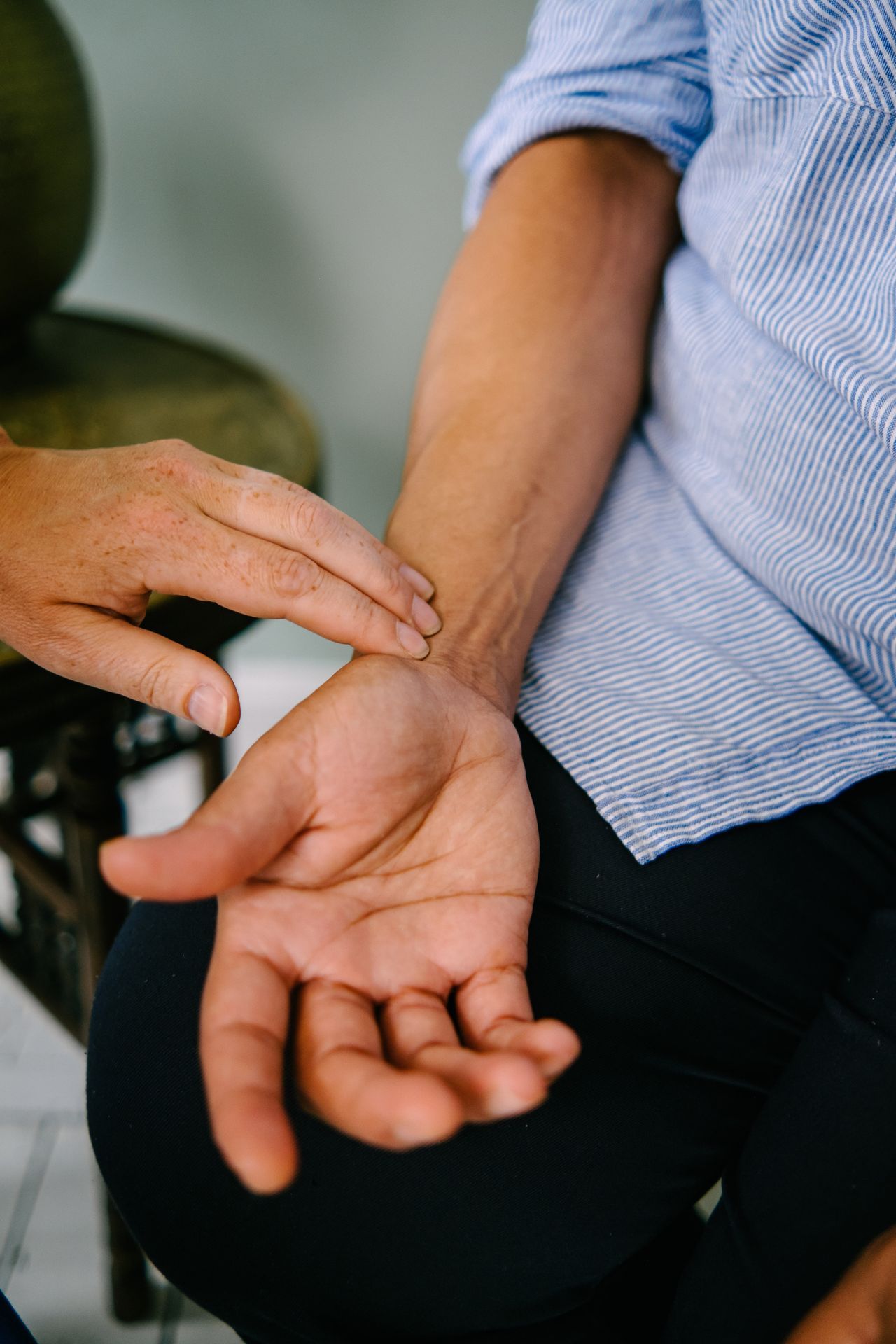
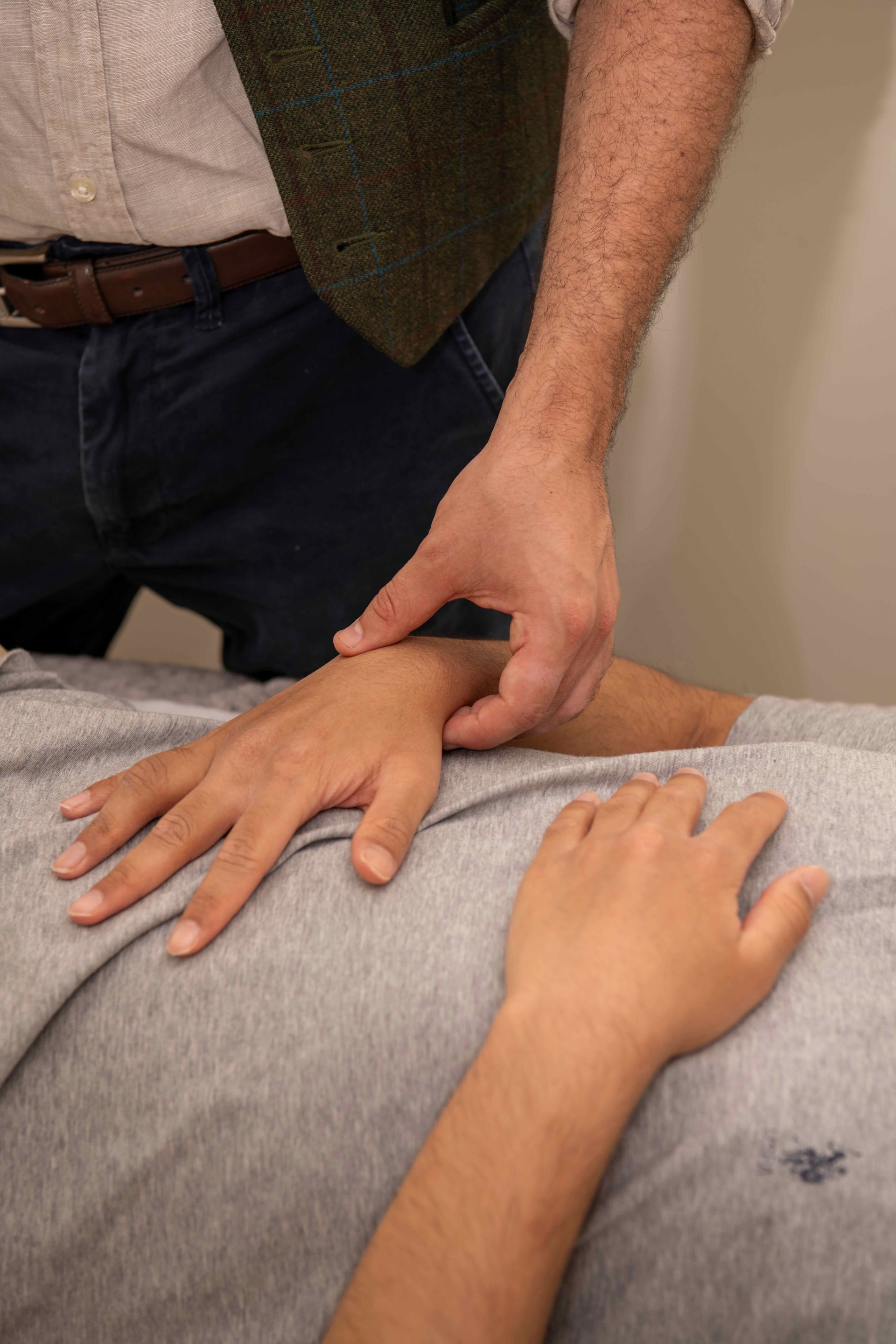
When a doctor takes your pulse, they are usually counting your heart rate. In acupuncture, the pulse tells a much richer story. I gently place three fingers on the radial pulse at each wrist, just below the base of the thumb. Each of the three finger positions, on each wrist, is associated with different organ systems, giving a picture of how the whole body is functioning.
I'll feel the pulse at different depths, from very light pressure to deeper pressure, and pay attention to qualities such as:
- Strength: is the pulse strong and full, or weak and hard to find?
- Depth: does it sit close to the surface or deeper down?
- Speed and rhythm: is it fast, slow, regular or irregular?
- Texture and shape: for example, does it feel thin, tight, smooth or slippery?
- Balance: how do the different positions and the left and right wrists compare?
In Japanese acupuncture traditions, the pulse isn't only used to reach a diagnosis and then forgotten about. It’s used as a barometer for how a patient has responded to each and every needle. It’s a real-time feedback mechanism that lets me refine the treatment as we go, so each point is chosen with intention rather than following a fixed formula.
Pulse diagnosis is completely painless. All you need to do is relax and rest your arms comfortably.
Abdominal Diagnosis: Listening to the Hara
Abdominal diagnosis (known in Japanese acupuncture as hara diagnosis, or fukushin) is a defining feature of the Japanese approach and one of the most valuable tools in my practice.
In Japanese tradition, the abdomen, or hara, is seen as the centre of the body's vitality. Different areas of the abdomen are associated with different organ systems and channels, so gently palpating it gives me a clear, physical map of where there may be imbalance.
With your permission, and with you lying comfortably on the treatment couch, I will gently press on different areas of your abdomen. I'm feeling for things such as:
- Areas of tightness, tension or resistance
- Tenderness or sensitivity
- Differences in temperature (for example, one area feeling cooler than another)
- Softness or a lack of tone
- Pulsations and how strong or deep they feel
Like the pulse, the abdomen gives immediate feedback during treatment. Often, after a few carefully selected needles, an area that was tight or tender becomes noticeably softer and more comfortable. Many patients are surprised by how quickly they can feel this change, and it's one way I confirm the treatment is working.
The touch is gentle, and I will always explain what I'm doing first. If any area feels uncomfortable, just let me know, and if you'd prefer not to have abdominal diagnosis, we can work without it.
Step 3: Coming Up With Your Diagnosis
Once I've gathered everything from our conversation and the diagnostic techniques, I bring it all together to form a diagnosis in Chinese Medicine terms.
This is where the pieces of the puzzle start to connect. Rather than treating "back pain" or "insomnia" as a standalone label, I look at the underlying pattern that explains why these symptoms are showing up for you, in the way that they are, at this point in your life. Two people with the same condition may receive very different treatments, because the root cause is different.
I'll do my best to explain my thinking in clear, simple language. This includes what I think is going on, how we can approach it, and what a realistic treatment plan might look like.
Step 4: Your Acupuncture Treatmentt
A Gentle, Minimal Approach
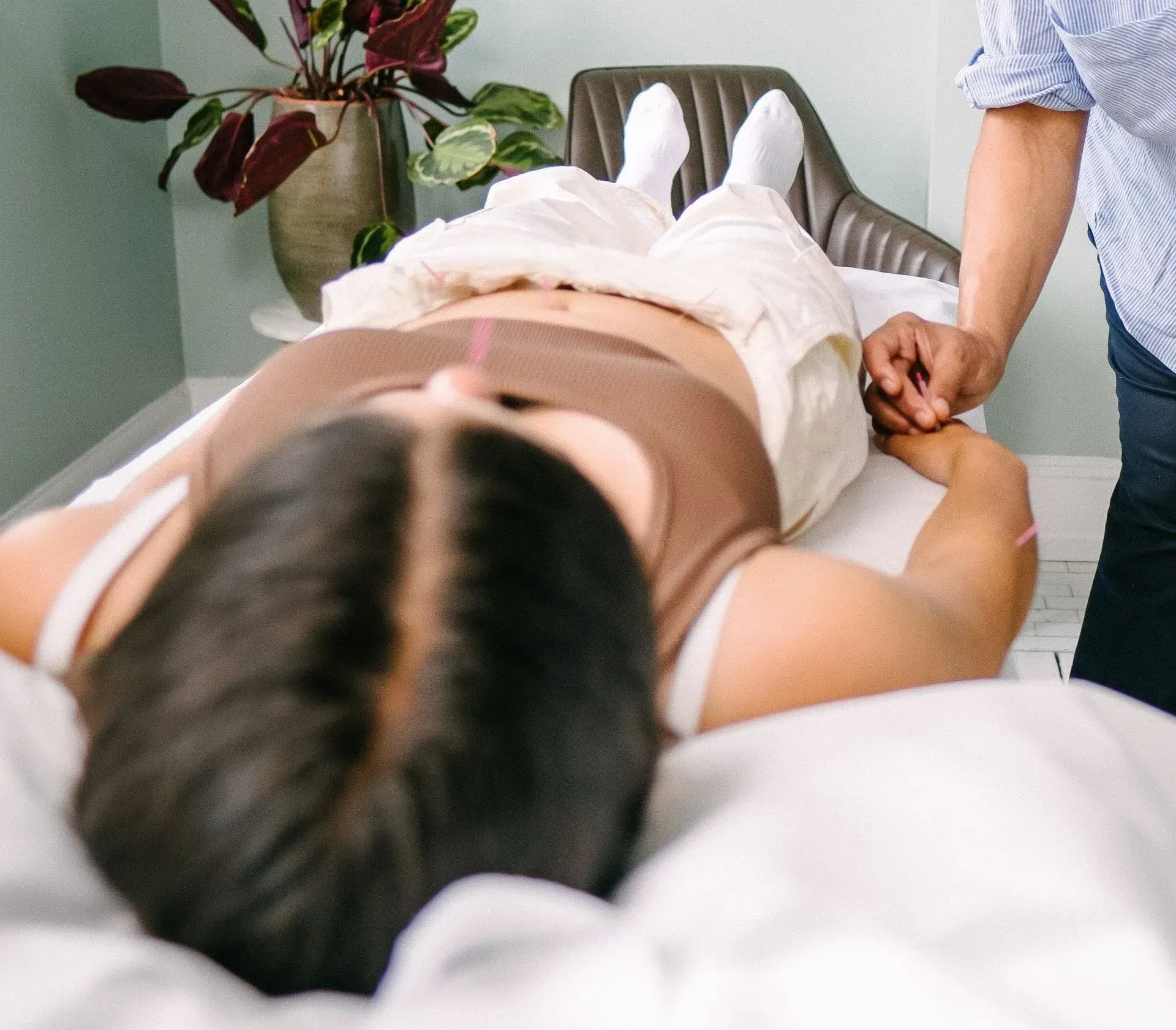
My approach blends the simplicity and gentleness of Japanese acupuncture with classical acupuncture lineages. I generally use between 4 and 8 needles, far fewer than many people expect. The aim is to use the minimum intervention necessary to create the greatest change, gently nudging the body back towards balance.
Tailored Techniques
Every treatment is shaped around you and how you show up in the clinic on that day. Depending on what you need, alongside acupuncture, I may use:
- Remedial massage therapy to release tight, restricted muscles
- Sotai, a Japanese technique using gentle movements and postural balance to ease tension and restore natural alignment
- Tapping techniques to stimulate points and channels gently
- Moxibustion, a warming therapy using the herb mugwort
- Cupping, which is often used for muscular tension and pain
- Lifestyle, diet and self-care guidance to support your progress between sessions
And much more. I draw on a wide range of training so that the treatment fits you, rather than a one-size-fits-all protocol.
Frequently Asked Questions
What Do Acupuncture Needles Feel Like?
This is the question I'm asked most often, and the honest answer is: much less than you'd imagine.
Acupuncture needles are extremely fine, many times thinner than the needles used for injections or blood tests. Sometimes you may feel a tiny sensation as a needle goes in, but this should pass almost immediately. Some people also notice a mild feeling of warmth, tingling, heaviness or gentle movement around the point, which is normal and often a sign that the body is responding.
If anything feels uncomfortable, please tell me, and I will adjust or remove the needle straight away. All needles are single-use, sterile and disposed of immediately after treatment.
What Happens When The Needles Are In?
Once the needles are in place, they are usually left in for around 20 to 30 minutes. You'll lie comfortably, stay warm, and rest. This is often the moment people feel their whole body let go. Many patients drift off to sleep, and some describe it as the most relaxed they've felt in a long time.
I'll check in with you during this time, and if you need anything or want to stop, just let me know.
How Will I Feel After Acupuncture?
Everyone responds a little differently, but the most common thing patients tell me is how deeply relaxed they feel. During treatment, the whole nervous system begins to settle, shifting out of the "fight or flight" state that so many of us live in, and into a calmer "rest and digest" state.
After treatment, many people notice:
- A deep sense of calm and relaxation
- Better, deeper sleep, often from the first night
- An improvement in mood and a lighter, clearer head
- Reduced pain or tension
- Feeling more like themselves again
Some people feel sleepy or light-headed immediately afterwards, so I recommend giving yourself a few minutes before driving.
Occasionally, a small bruise can appear where a needle was placed, and sometimes symptoms can briefly shift before they improve. This is normal and usually settles within a day or two. If you're ever unsure about how you're feeling after a treatment, you can get in touch with me.
How Do I Prepare for My First Acupuncture Session?
A few simple things can help you get the most out of your first session:
- Eat something light beforehand. Try not to come on an empty stomach or straight after a heavy meal.
- Wear loose, comfortable clothing that you can easily roll up to the elbows and knees.
- Bring a list of any medications or supplements, plus any relevant test results or scans.
- Let me know if you're pregnant, trying to conceive, on blood thinners, or have any medical conditions so that I can tailor your treatment safely.
- Avoid alcohol and strenuous exercise just before and directly after your treatment.
Give yourself some time afterwards. If you can, avoid rushing straight into something stressful, and let the effects of the treatment settle in.
Think about what you'd like to achieve. It's helpful to consider what "feeling better" would look like for you.
How Many Acupuncture Sessions Will I Need?
This depends on your condition, your overall health and how long you have had your symptoms. As a general guide, I recommend weekly appointments for the first three to four weeks. This gives us enough time to see how your body responds and to create meaningful, lasting change.
Many patients notice improvements within this initial period. For longer-standing or more complex conditions, treatment may continue for longer, with sessions becoming less frequent as your health improves. Follow-up appointments typically last around one hour.
Is Acupuncture Safe?
Yes. When carried out by a fully qualified practitioner, acupuncture is extremely safe with very few side effects.
I am a Registered Member of the British Acupuncture Council (BAcC), the UK's largest professional body for acupuncture, whose members complete extensive professional training and follow strict codes of safe practice, hygiene and ethics. I'm also a first-class honours graduate of the International College of Oriental Medicine (ICOM), where I now teach and sit on the Senior Management Team.
Acupuncture can be safely adapted for pregnancy, fertility and IVF support, and for people managing a wide range of medical conditions. Your longer first appointment gives us plenty of time to discuss any needed precautions.
Acupuncture Can Help Support You
It’s a gentle, compassionate approach that treats the body, mind, and spirit. Book an initial consultation now.